Bar Carts

Frequently Asked Bar Carts Questions

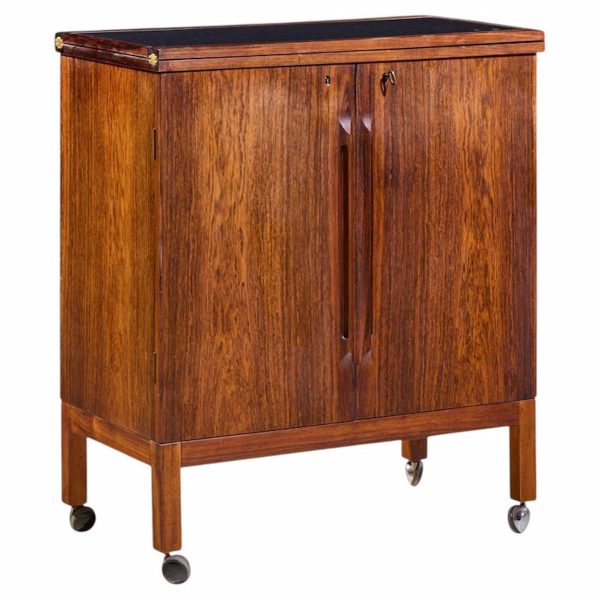
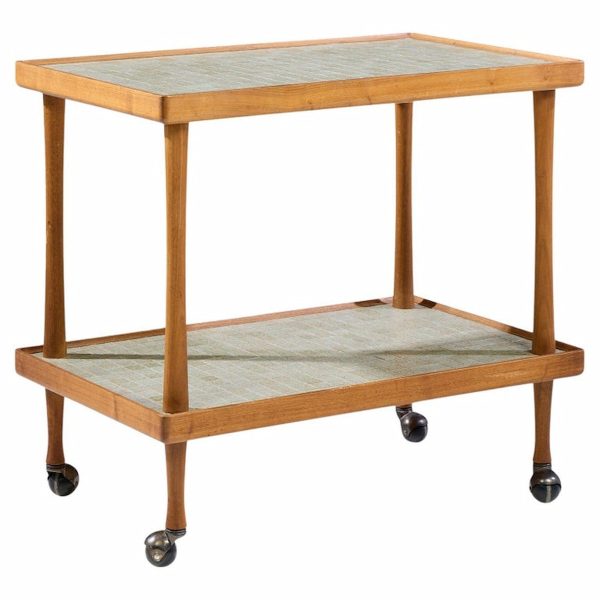
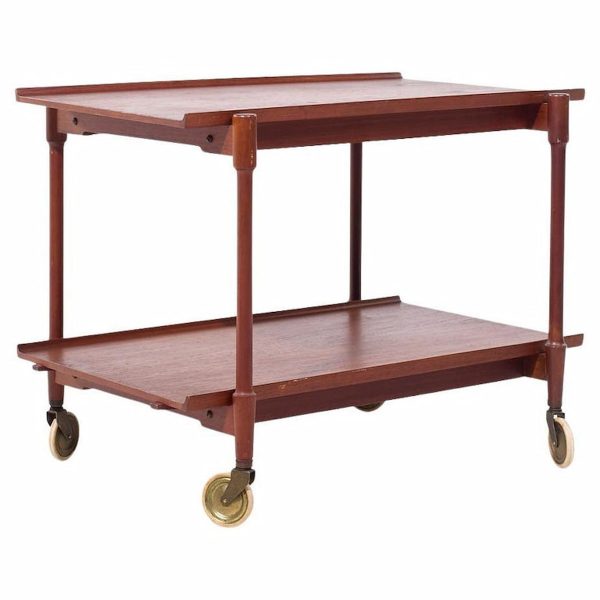
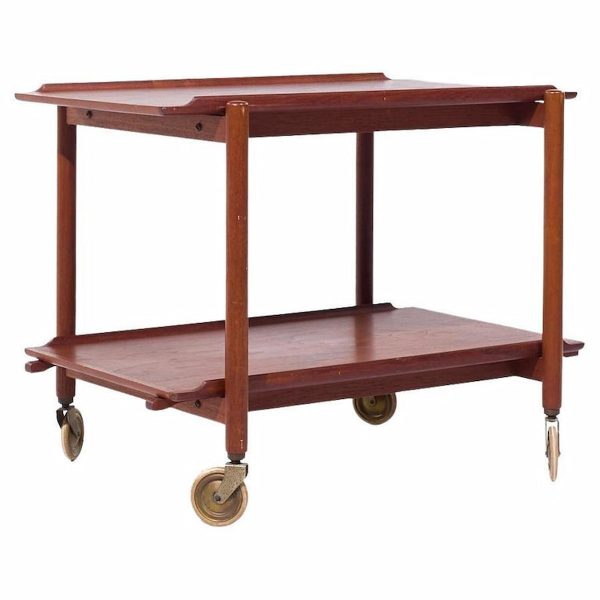
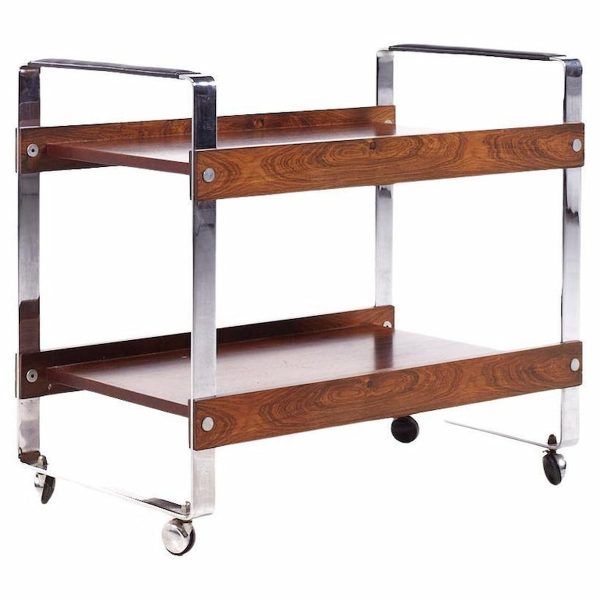
The most common materials are polished brass, chrome-plated steel, solid teak, walnut, and lacquered wood. Danish designs favor oiled teak and rosewood with clear glass tops, seen in carts from Torbjorn Afdal for Bruksbo, Poul Hundevad, and Johannes Andersen for Silkeborg. American brass bar carts from makers like Milo Baughman, Harvey Probber, and Mastercraft pair polished brass frames with glass or burlwood shelves. Broyhill Brasilia used walnut cases with laminate, brass, or tile accents. We document materials and construction details on every listing so you can match a cart to your interior.

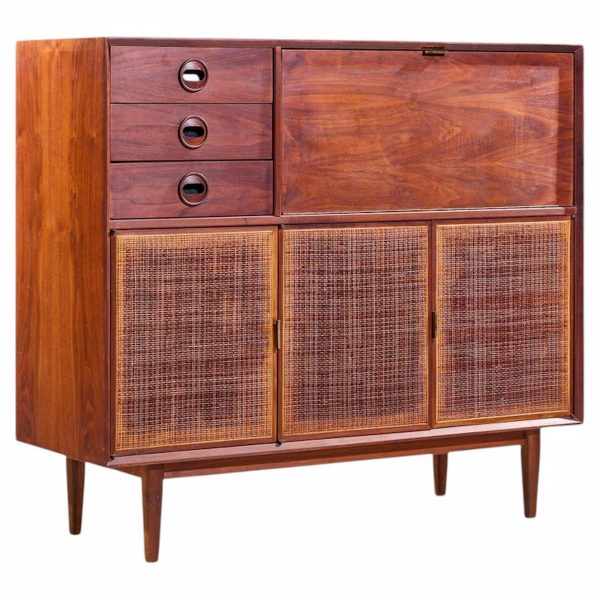
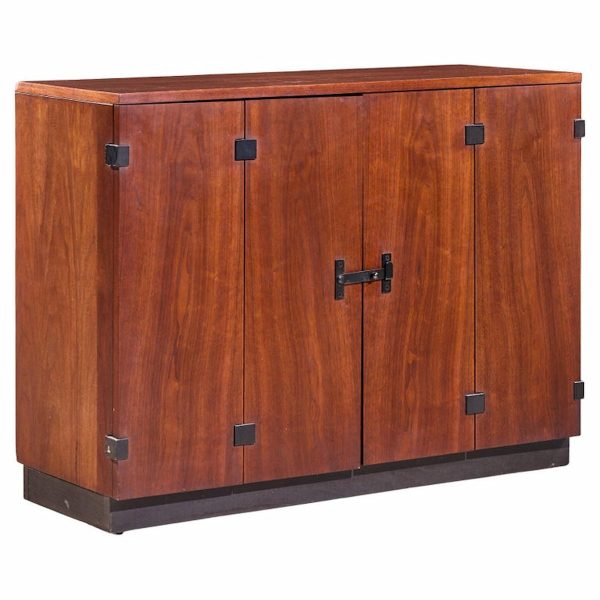
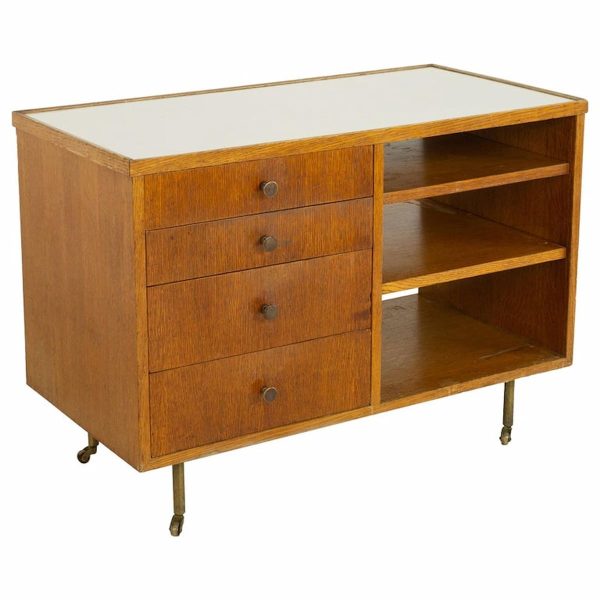
A bar cart is a rolling piece with wheels, designed for serving and portable use. A bar cabinet is stationary furniture with doors and shelves for storing bottles and glassware, often designed to hide the bar contents when not in use. Our related search data shows many buyers compare the two, a bar cabinet works better for a dedicated home bar or apartment where storage is the priority, while a bar cart is better for flexible serving and entertaining. If you are deciding between them, browse both categories and contact us for specific recommendations.

Usually, yes. Well-made mid century bar carts used sealed metal or rubber casters that roll smoothly after decades of service when maintained. Worn or cracked rubber wheels can be replaced as part of our optional restoration before shipment. If a cart has a specific caster issue noted in the listing, we detail it in the condition notes so there are no surprises on delivery.

Yes. For pieces tagged “Restoration Available”, restoration can be added as an option at cart, including brass and chrome polishing, wood refinishing, glass replacement, and caster service. Some pieces are sold Vintage As-Is. Restoration is entirely optional. Many collectors prefer the original warm patina on brass and the character marks on aged wood, particularly on designer-attributed pieces where originality affects collector value.