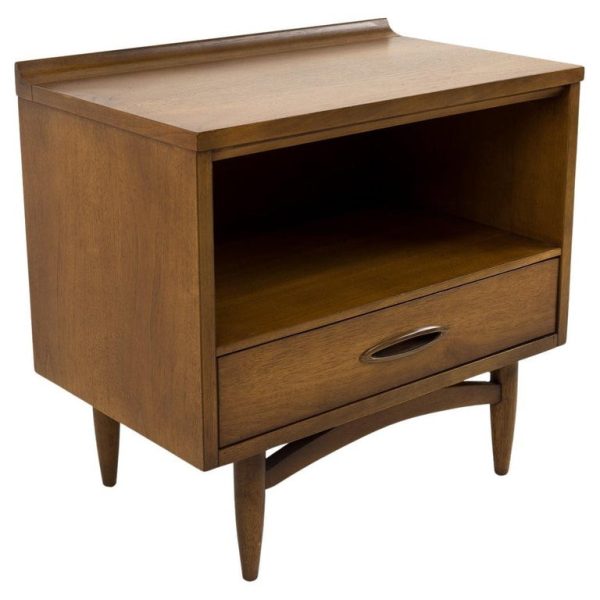
End Tables

Frequently Asked End Tables Questions

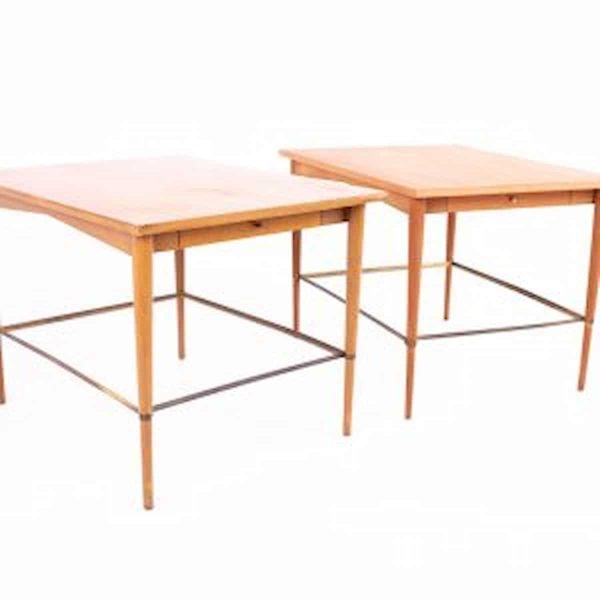
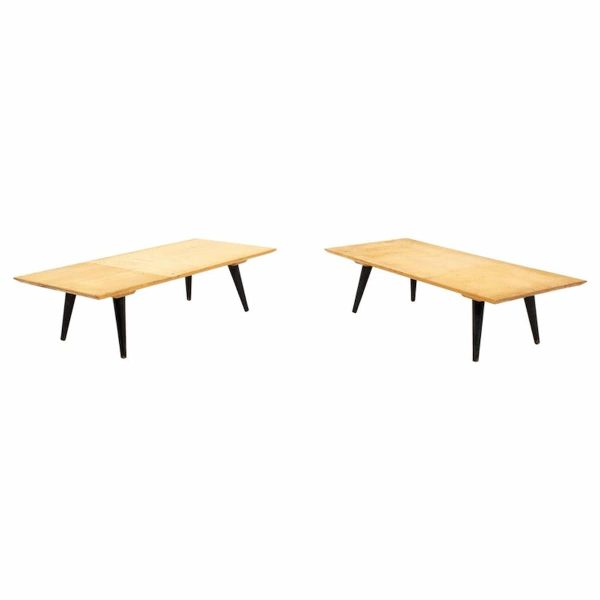
Yes. A portion of our end table inventory is listed as matching pairs or sets of 2, original factory-matched pieces from the same production run. Matching pairs command a premium over single units because intact pairs are increasingly rare on the secondary market, and many mid century end tables were originally designed as side-to-side pairs flanking a sofa or bed. Use the filters on this page or contact us with the exact count you need and we will help you locate a match.

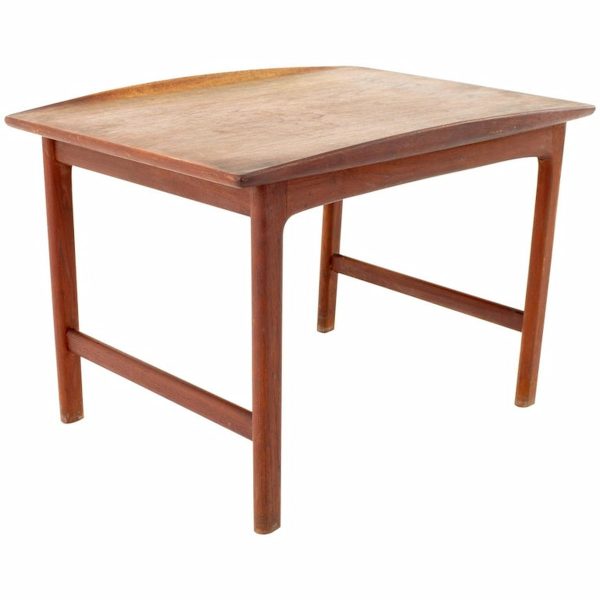
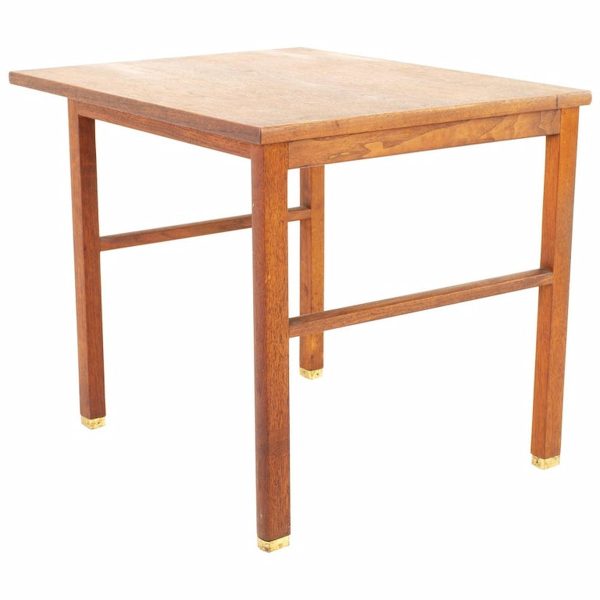
The most common materials are walnut, teak, rosewood, and oak, often with contrasting wood inlays, travertine or stone tops, or inset brass or tile accents. Harvey Probber frequently combined travertine with brass frames, Danish manufacturers favored teak with clean rectangular tops, and American manufacturers like Lane and Drexel used sculpted walnut with dovetailed drawer construction. When browsing, look for solid wood tops (not thin veneer), dovetailed joinery on drawers, and tapered or splayed legs, all signs of higher-end mid century production.

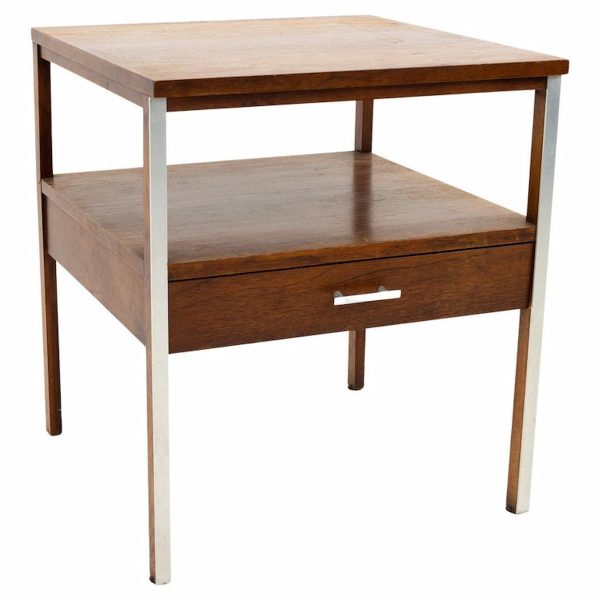
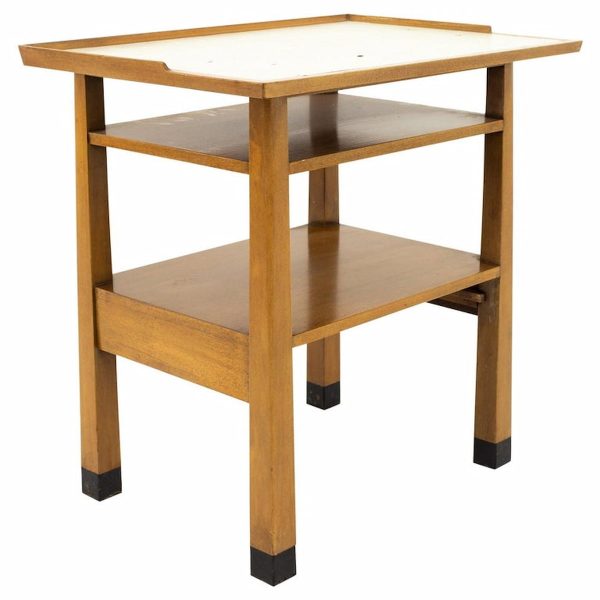
Many do. A significant portion of our end table inventory features single or double drawers, drop-front compartments, or lift-top storage. American manufacturers in particular produced storage end tables for smaller postwar living rooms where storage was at a premium. Danish designs more often feature an open lower shelf instead of a closed drawer. Use the filters on this page to narrow to tables with drawers or storage, or contact us with your specific configuration need.

Yes, and many buyers do exactly that. Mid century end tables and nightstands overlap heavily in format, seat-height proportions, and construction, and most end tables with drawers work equally well beside a bed. If you are specifically building out a bedroom, also browse our mid century nightstands category, which includes pieces specifically listed as nightstands. Some items appear in both categories because they serve both roles equally well.